


Some photography ventures can be grueling. Ask any wedding, sports, or nature photographers and they’ll tell you they are exhausted when finished.
Yes, like hiking and hunting, some photography treks can be a grind. The same is true for the digiscoping guys and gals traversing myriad landscapes around the world.
While dressing appropriately for current conditions and wearing sensible shoes aid the cause, digiscope photographers can decrease fatigue by managing the gear they tote to the field. In the hiking and mobile hunting world, this is often called ounce-counting – and it matters.
It’s academic. Less fatigue means a more enjoyable and successful digiscoping experience.
Here are some basic pointers for scaling back the weight in your bag or pack
Essential Gear Only
Okay, I know this is subjective. However, with a little thought, you can easily come up with a combination of gear you’re happy with. Ounces quickly add up to pounds – and sometimes it’s a matter of deciding the level of comfort you really require for the day.
For example, you may enjoy making image edits in the field with a laptop. Unless you truly view this as a need and have an efficient way to pack and use one, leave it at home. You can still do some edits on your smartphone on top of texting or emailing them to yourself for editing later at home or in the car.
While you may have the budget to buy the most cutting-edge lightweight gear on the planet, you can still make a huge difference in comfort with a humbler set of gear. It’s all about choices and weight.
Start with a Light Pack
When mentally sorting through a collection of gear, you can easily forget to consider the size and weight of your backpack or

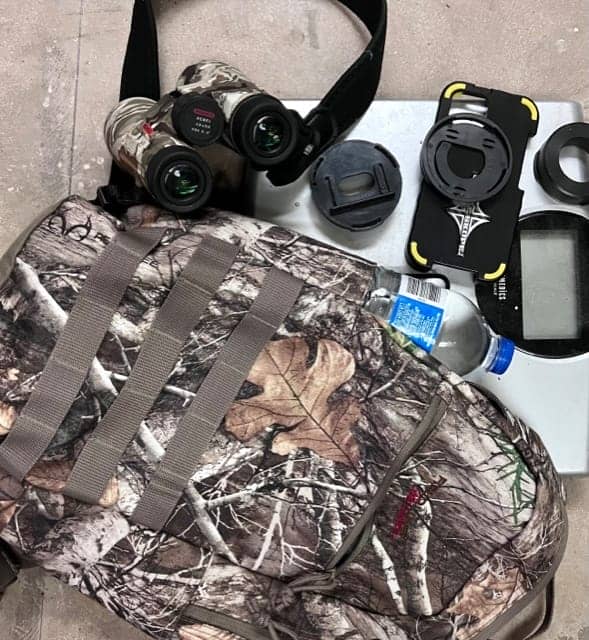
This 511-tactical-style pack is a great piece of gear, but it weighs close to 6 pounds before even adding any gear.
field bag. A large rugged pack with extra compartments and special features is great, but what does it weigh? You know the one, that high-dollar pack that can handle the stoutest and heaviest collection of gear.
Don’t automatically choose the awesome backcountry hiking pack typically used for a multi-day trip. While it’s a personal choice, you rarely need it for a day of digiscoping.
Distributing and Managing Optics Weight
Are you trying to decide between binoculars and a spotting scope for your venture? Consider what type of outing it will be. If you’ll be mostly stationary, perhaps you can justify the weight of a spotting scope and tripod. However, if you plan to move around a lot, a solid set of binoculars is the answer.
There are a few ways to manage your glassing and digiscoping game. Did you know that a thicker binocular strap distributes weight more evenly and can be more comfortable? It’s true.

A bino chest harness distributes weight, yielding more comfort. A chest pack provides a little extra storage.
Perhaps the most popular method is to use a binocular harness system. If you’re going to be mostly stationary, a regular strap can be adequate. However, if you plan on staying mobile, a harness system like Phone Skope’s Bino Harness can stretch your time outdoors through added comfort. They eliminate all weight from the neck and shoulders. Two extra bonuses; they keep your binos from slamming against your chest. Secondly, if you team your harness with a binocular chest pack. You gain a little extra storage, as they come with extra compartments for accessories like a phone charger and digiscoping adapter kit.
Consider Lightweight Binoculars
Will most of your viewing be within 200 yards? If so, super-high magnification isn’t necessarily important. This is good information to consider. Choosing lower magnification means a lightweight set of binoculars that is easier to pack and tote around. Also, the higher the magnification, the less stable the image you are viewing becomes. Less powerful binos can be more forgiving.
Share the Weight with a Partner
This one sometimes gets overlooked. Do you sometimes share the digiscoping experience with one or more additional people? If so, it’s time to get on the same page and share the load. For example, if you want to bring an extra set of optics and pack a lunch, you can distribute the ounces and pounds between friends.
Remember, teamwork makes the dream work. It also can lessen neck and back strain.
Leave the Tripod at Home?
If you choose to take a spotting scope, you’re going to need a steadying force. That three-legged marvel is a necessity. Tripods can make a huge difference in comfort and effectiveness. They can even help with binoculars (especially a heavy set). If you pack one, consider choosing a lighter model. Your bones and muscles will thank you.
Again, if your digiscoping mini-voyage likely involves manageable distances, consider binoculars (lower-powered ones if possible) and a good harness–and remember, lower magnification typically means more stability and less bouncing targets that are hard to adequately stabilize for the shot.
Tripods are great for digiscoping and are a great gear choice. However, ask yourself what kind of day you plan on having from a physical standpoint.
Make Your Gear Prove Its Worth
Often, I’m astonished when I pilfer through my hunting bag while sitting in a tree stand or blind. I can’t find the important

This lightweight backpack weighs only a pound and costs $10. It offers plenty of storage for most digiscoping field days.
gear because of the irrelevant items. I love my gadgets and they often lead to back strain and frustration. Requiring gear to earn their place in my bag is my favorite sentiment for digiscoping and managing weight and comfort. This requires more than simply predicting how physically taxing your day of digiscoping will be. Consider what gear you’ve actively leaned on in the past. If it’s prevalent, pack it.
So, discard the gear you never use. I remove the drawstrings from the hems of all my garments. After a couple of digiscoping trips, I’ve got a good idea of what to pack and what to leave behind. Ounces increase quickly. Think it through carefully. The temptation to take unnecessary items will raise its ugly head. Be resolute, my friends. Your back, neck, and photo album will thank you.