


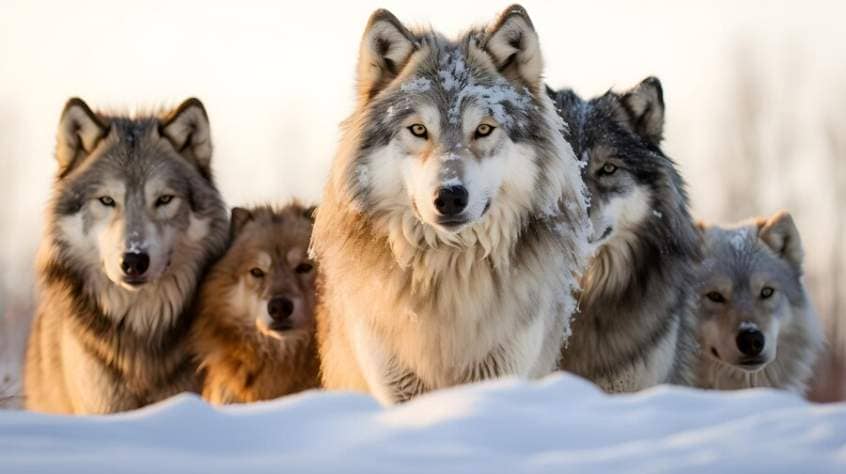
Since making the endangered species list in 1974, gray wolves in North America have been a hot-button topic. It was at this time that the majestic species became protected from both hunters and trappers.
However, thanks to intense efforts over the last 50 years, the gray wolf has rebounded, exceeding recovery goals, returning to the Great Lakes, the northern Rockies, California, and the Pacific Northwest.
A recent introduction of 10 gray wolves to Colorado from Oregon is the latest in a line of evidence of this true conservation success story.
That is to some.
Gray Wolf Quick Facts

Despite some ecological benefits associated with gray wolves, their presence causes monetary damage, and often, unrest between conservationists, farmers, and habitat managers, just to name a few.
With their daunting, yet beautiful howls, physical strength, and penetrating gaze, gray wolves draw both acclamation and controversy around the globe. Here are a few traits of the “biggest dogs on earth”;
- Travel in packs of 2 to 30 members.
- Pack animals with territories up to hundreds of miles.
- Litters contain 4-6 pups.
- Lifespan is usually 8-15 years.
- Weight ranges from 40-175 pounds.
- Carnivores, prefer both small and large mammals (adults can eat 20 pounds in a single meal).
Fun fact; Wolves are the wild ancestor of all our domesticated dogs, from poodles to greyhounds to Labradors.
There are more arguments and angles to gray wolf introduction and management to count, but they often center around conservation. The controversy is marked by science and, for some, even personal morals. However, both are viewed through different lenses, depending on the audience.
Differing Ideas about Conservation
While all parties involved assert that gray wolves play a vital role in the health and proper performance of ecosystems, there is contention regarding how to achieve it.
Whether listed or delisted, environmentalists typically argue that lethal means of controlling gray wolves negatively influence other species-namely unintended ones killed as a result of trapping efforts.
Other opinions are more ethical and even emotional. In fact, one popular view screams that people don’t need to kill wolves to protect their livestock and land or; “Humans have choices, while wolves do not.”
Conversely, many others feel that gray wolves, existing or reintroduced, are detrimental to livestock protection, the fur trade, and even sport.
There is also a camp that claims delisting (reintroducing) gray wolves can positively affect landscapes and vegetation, with proper management. For example, in some areas once overgrazed by elk, deer, and other species, habitats improved once gray wolves were reintroduced. There is a fine line to acknowledge for this bunch.
Needless to say, the debate is a tangled mess, involving many stakeholders, including farmers, ranchers, environmentalists, hunters, and trappers. It’s also a polarizing issue between federal, state, and tribal bodies.
Colorado
The U.S. Fish and Wildlife Service recently, after a thorough review, found gray wolves to no longer meet the criteria as an endangered species-a major development for many parties, especially environmentalists.
However, though Colorado Parks and Wildlife will continue its efforts to restore and manage gray wolves in the Centennial State, the effort is considered to be experimental in nature.
Barely approved by Colorado voters, the recent release of 10 wolves has, as expected, been a divisive endeavor. As such, the fact that the reintroduction garnered much of its support from urban voters-ones far removed from the species’ native habitat, has been a bone of contention for some Coloradans.
With further gray wolf reintroduction to come, Colorado will continue to be home to vigorous debate from many groups and viewpoints-and hopefully ever-improving numbers and habitat.
Stay Tuned
The gray wolf’s story is one of the most captivating sagas of American wildlife, conservation, and habitat management. One thing’s for sure, the regal species is being rejuvenated. Nevertheless, how to carry on moving forward will continue to be a dilemma shared among a variety of stakeholders.