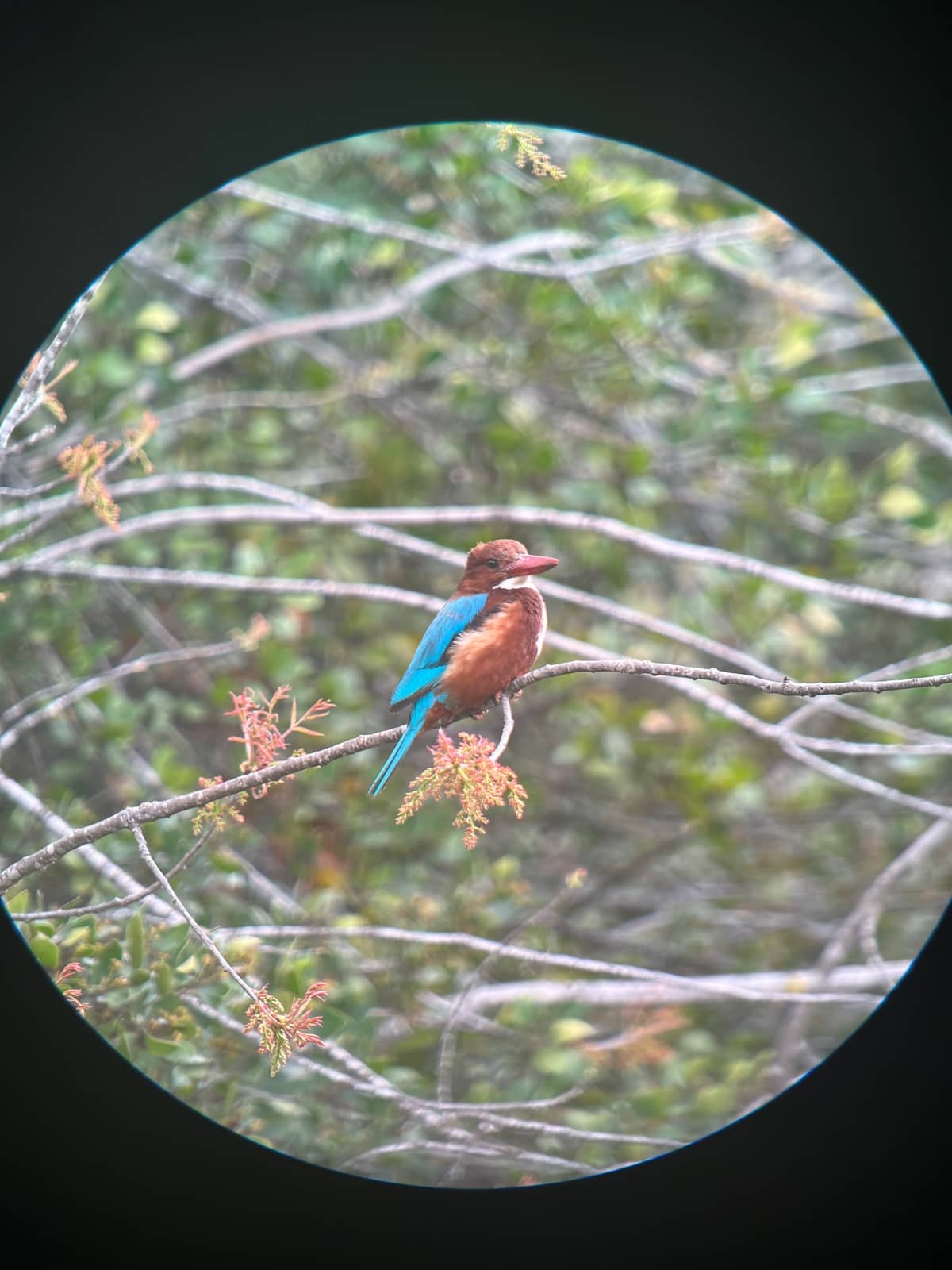


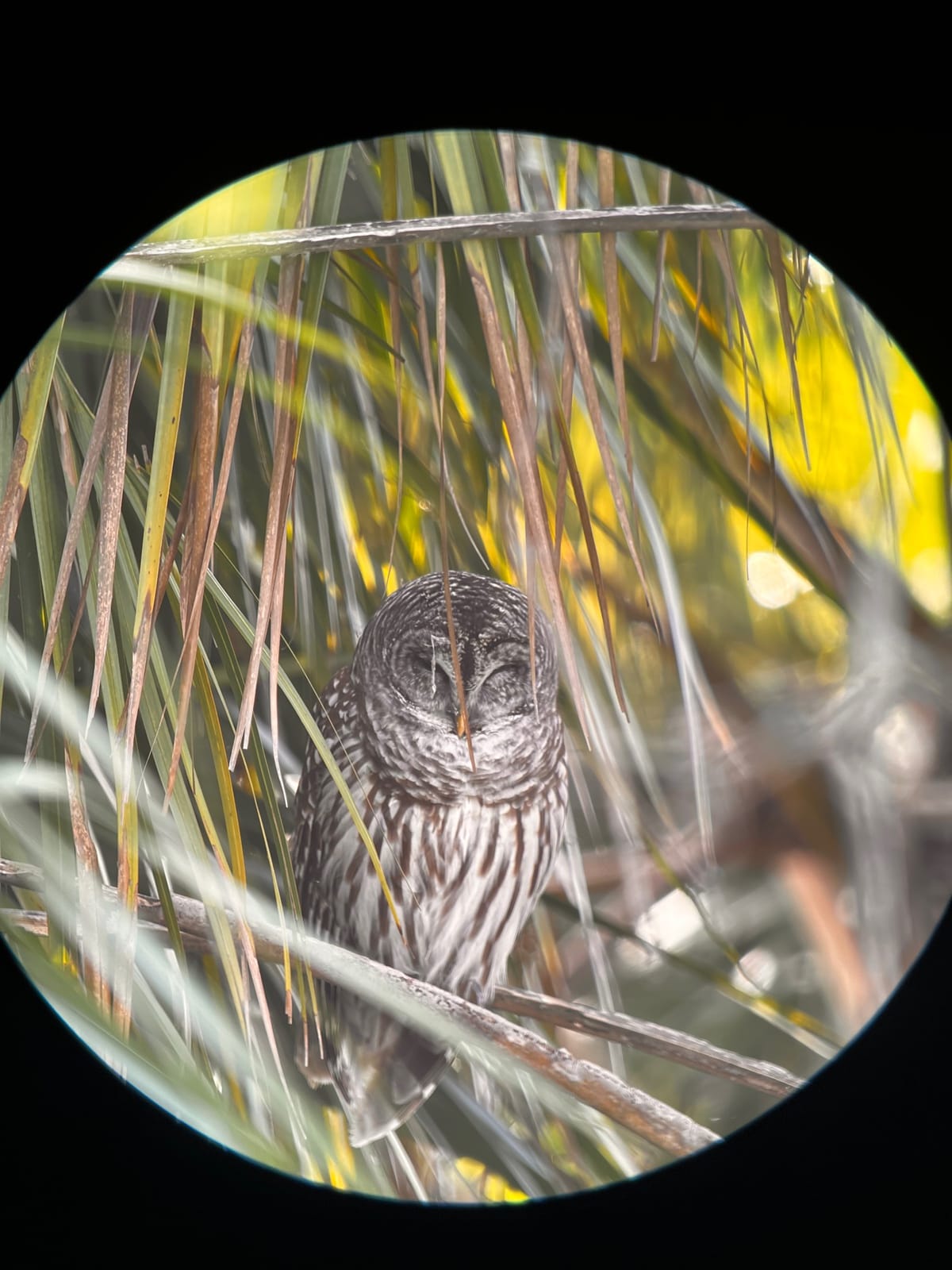
My Phone Skope attachment has become an indispensable tool in my birding toolkit. So much so that two years ago when we stopped at a water treatment plant in amongst a cow field on the drive home from the San Diego Bird Fest to seek out our lifer Pacific Golden-Plover who was tucked away in a group of 1000+ Black-bellied Plovers and I couldn’t find my Phone Skope in the back of our car to memorialize the moment…I was an inconsolable mess with cows and plovers avoiding my gaze. Fortunately, a few days later after thoroughly emptying every pocket of our bags and going through the car, we found it, and all was well. Needless to say, I frequently check my pockets to ensure I have my Phone Skope handy.
Most people likely use what may seem like a fairly simple hunk of plastic to transform their spotting scope and phone into a competitive DSLR. Of course I do that and try to see if my makeshift camera can outperform my husband’s Nikon D500, but my favorite thing to do is use it for public education. My first career was as an interpretive naturalist in state parks, and I love to connect folks with the wonders in our own backyard.

Although I no longer work in the field, my husband and I are dedicated Tufted Puffin spotters in our community and regularly lead trips down onto the beach to look for these iconic birds. We began to offer these walks as many folks would return from the beach hanging their heads as they failed to see Tufted Puffins. I admit that it can be hard to spot the birds on Haystack Rock as there are thousands of Common Murres, cormorants, and Pigeon Guillemots that also make the rock their summer home. But seeing a Tufted Puffin in the wild is well worth the time. It’s a highlight of our year to set-up our Kowa TSN-99 Prominar and TSN-883 Prominar spotting scopes a few hundred feet from Haystack Rock an invite beachgoers to take a glance at their very first puffin.
One of the first things I’ve learned when having a spotting scope available for the public is that folks don’t know how to use it. Which is not to shame folks at all, but just a fact that your first use of a spotting scope will probably be a learning moment. Some of the most common issues are folks having difficulties finding the bird in the eyepiece, kids want to touch every little bit, kids also cannot figure out looking with just one eye, and it can be difficult to invite folks to use it!
 So how does Phone Skope fit into that? By attaching your phone to your scope, you are creating an easy-to-use screen that helps cut down on a lot of those first-timer issues. With the spotting scope view on your screen you can easily point out birds and give viewers a frame of reference which will help them scope it out or use binoculars to spot the bird. When working with kids, a few helpful things I’ve learned is to have a stepstool available so parents don’t have to juggle getting them to the scope eyepiece and by having the Phone Skope attached with the bird in view they can more easily see what you are looking at without reaching for the scope. The advent of cell phones has changed so much of our world and many kids are already familiar with looking at the screen and can easily spot the bird visible on your screen. Now that they know what to look for, offering another scope for viewing or lending binoculars can ease folks into trying to find the bird for themselves and set them on the path to success. As for inviting folks over to check out whatever bird I am looking at, I have had more success engaging with passersby when I have my Phone Skope mounted rather than asking them to look into the scope eyepiece.
This small item can make a world of difference in engaging people in nature and help build connections to the cool things that are near them.